★★★★☆4.6(334 reviews)
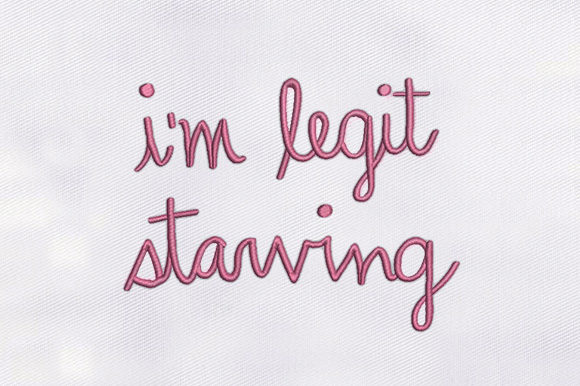
I m Legit Starving – A Playful Embroidery Design for Personalized Gifts
First Impressions: Whimsical and Warm
When I first saw the design "I m Legit Starving," I knew it had potential. As an embroidery designer with years of experience, I look for more than just visual appeal—I seek designs that evoke emotion, tell a story, and fit seamlessly into the lifestyle of the end user. This machine embroidery design has a clear voice: playful, humorous, and relatable. It's perfect for those who want to add personality to their personalized gift products.Applications Across Product Types
- Baby Blankets: Add a sense of humor to baby showers by stitching this onto a cozy, pastel-colored blanket. Parents will love the lighthearted message after countless late-night feedings.
- Kitchen Towels: The design fits beautifully on cotton or linen towels. Place it near the top edge, maybe with a small illustrated plate or fork nearby for added whimsy.
- Pillow Covers: Use it as a decorative statement on throw pillows. Pair it with minimalist thread colors to keep the design subtle or go bold with contrasting shades for maximum impact.
- Aprons: Especially great for custom aprons given as housewarming gifts or to bakers and chefs. The phrase adds a cheeky twist that reflects the recipient's passion for cooking.
- Custom Tote Bags: Ideal for Etsy sellers offering reusable bags. It’s catchy and can be paired with other food-themed embroidery elements for a cohesive look.
- Blanket Embroidery: When placed centrally, it becomes a conversation starter. Make sure to adjust stitch density based on the blanket’s fabric texture.
- Nursery Decor: For a more mature audience, like parents-to-be, it can be used subtly in nursery wall art or diaper bags to express the reality of parenthood with a smile.
- Wedding Keepsakes: While not traditionally romantic, this design could work for novelty wedding favors or guest towels at a casual, themed reception.
- Craft Fair Products: It stands out on display and attracts buyers looking for something unique and expressive. Consider pairing it with a matching set of kitchen-themed designs for variety.
- Etsy Listings: As a digital embroidery file, it’s ready to be sold or used in finished products. Its broad appeal means it can attract multiple customer segments.
Where to Use with Caution
- Small Lettering: If you plan to scale down the design (e.g., for baby clothes), double-check the legibility. Some letters might become harder to read at smaller sizes.
- Delicate Details: Though the design isn’t overly intricate, fine lines or small characters may require testing on similar fabrics before production.
- Textured Fabric: Stitching on canvas or flannel may alter the appearance slightly. Test on scrap material to ensure clarity and consistency.
- Thick Towels: The thickness of some kitchen towels can affect how well the stitches lay flat. Use appropriate stabilizer to avoid puckering.
- Stretchy Baby Clothes: Avoid placing the design on stretchy materials unless it’s specifically designed for such use. Stretch can distort the text and ruin the effect.
- Curved Surfaces: On round objects like oven mitts or round pillow covers, consider adjusting the layout to follow the curve smoothly.
- Dark Fabric: Thread color choice is critical here. Lighter thread colors will stand out better, so review your thread palette carefully before starting.
- Frequent Washing: Since this design is likely going on towels or aprons, make sure the stitches hold up over time. Always test wash a sample before mass production.
Practical Tips for Embroidery Makers
- Test on Scrap Fabric: Before embroidering the final product, always do a trial run on a similar material. This ensures the design works with the fabric’s weight and weave.
- Check Thread Color Contrast: Especially if using on dark backgrounds, choose thread colors that pop. You don’t want the design to get lost in the fabric.
- Confirm Hoop Size: Though specific hoop size details aren’t provided, ensure your hoop accommodates the full design area. Leaving too much space can lead to distortion.
- Review Stitch Density: Depending on the fabric type, adjust stitch density to prevent overcrowding or gaps. Too tight, and the fabric might pucker; too loose, and the design may look incomplete.
- Use Proper Stabilizer: A good backing stabilizer is essential for achieving clean, even embroidery. Try tear-away or cut-away stabilizers depending on your project.
- Compare Light and Dark Mockups: Use printable mockups to see how the design appears on both light and dark fabrics. This helps in choosing the right placement and thread combination.
- Check Small Details After Stitching: Look closely after completion. Sometimes, tiny elements like apostrophes or hyphens can disappear or misalign during the process.
- Confirm Commercial Licensing: Always verify that the digital embroidery file allows for commercial use. This is crucial if you're planning to sell finished products or digital files.
⬇️ Download Free
Free download · No sign-up required
🔗 You Might Also Like

Kitchen
As an experienced embroidery designer who frequently works with Creative Fabrica...
Kitchen
As an experienced embroidery designer, I always look for digital embroidery file...
Birds
First Impressions of Brahma Chicken As an experienced embroidery designer, I alw...
Babies
As an experienced embroidery designer, I’m always on the lookout for meaningful,...

Nursery
Where to Use with Care Small lettering: If adding names or dates near the design...
